Bodyweight Strength Training That Builds Real Muscle (No Gym Needed)
Bodyweight strength training builds real muscle without a gym. A coach's guide to the best moves, how to make them harder, and how to keep progressing.
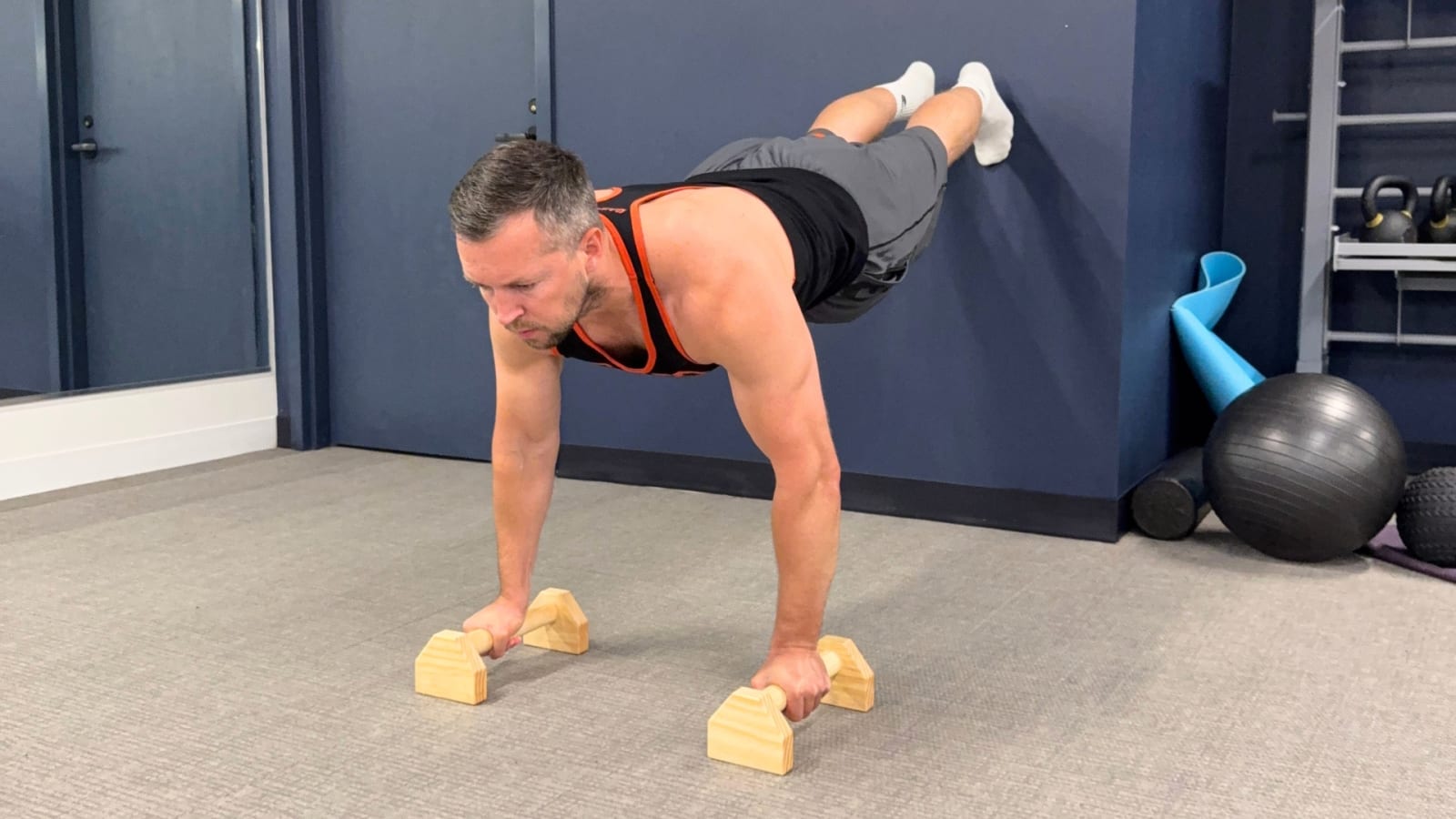
You don't need a gym, a rack of dumbbells, or a loaded barbell to build real muscle. Bodyweight strength training, done right and kept hard enough, builds genuine strength and size. It's also the one kind of training you can do in a hotel room, a garage, or the corner of your bedroom.
I spent over 20 years competing as an athlete, and a lot of the strength I still carry I built with nothing but my own bodyweight, long before I ever touched a barbell. So this is the coach's version of how it actually works: the best moves, how to make them harder, and the part most people miss, which is how to keep bodyweight work challenging enough to keep paying off.
Can you really build muscle without a gym?
Short answer: yes, with one honest caveat.
Muscle doesn't know what's creating the tension. It responds to three things: how hard it has to work, how close you push toward failure, and whether that work gets progressively harder over time. A barbell is one convenient way to deliver all three. It isn't the only way.
That's why bodyweight exercises to build muscle work, as long as the movement is hard enough for your current strength. Thirty easy push-ups build endurance. Eight hard ones you can barely finish build muscle. Same exercise, completely different stimulus.
In 16 years of coaching, the pattern I see most is people quitting bodyweight training right when it starts working. They assume "no gym" means "no results," so they never learn to make it harder.
The honest caveat: your lower body gets strong fast, and two-legged squats turn easy long before your legs are done growing. That's not a reason to reach for a barbell. It's a reason to progress the movement, which is what the last section is about.
The bodyweight moves that build real strength
You can train your whole body with a handful of movements, grouped by pattern. Pick one or two from each and rotate as they get easier.
Push (chest, shoulders, triceps)
- Push-ups are the foundation. Start with hands on a counter if the floor version is too hard.
- Progress to feet-elevated, then decline, then archer push-ups, working toward one arm.
- Dips on parallel bars, two sturdy chairs, or the edge of a counter.
Pull (back, biceps)
- Pull-ups and chin-ups. This is the one pattern that needs something to hang from: a doorway bar, a beam, a solid branch.
- No bar? Row under a sturdy table, or loop a towel around a door and pull.
Legs (quads, glutes, hamstrings)
- Squats, then split squats, then Bulgarian split squats with your rear foot on a chair, building toward a single-leg squat.
- Lunges and step-ups.
- Glute bridges, then single-leg.
Core
- Planks and side planks.
- Slow leg raises, lying or hanging.
Form matters more than rep count here. One clean push-up beats five sloppy ones. If you want to see how any of these should look, my exercise library breaks the movements down step by step.
How to keep bodyweight strength training hard enough to matter
This is the part almost everyone skips, and it's where bodyweight strength training either keeps working or stalls out. When a move starts feeling easy, you don't add weight. You change the movement so it demands more. Your levers, roughly strongest first:
- Harder variations. Swap the move for a tougher version. Push-up to decline to archer to one-arm. Squat to split squat to single-leg. This is your biggest lever by far.
- Slow it down. Take three to four seconds to lower into every rep. Control the way down and you add tension without adding a single rep.
- Add negatives. Can't do a full pull-up yet? Jump to the top and lower yourself as slowly as you can. That lowering builds the strength for the real thing, and it's one rung of the full progression to your first pull-up.
- Use a full range of motion. Go deeper. A squat to full depth and a push-up with your chest to the floor both do more work than a half rep.
- Go single-limb. One leg or one arm loads the working side far harder. Bulgarian split squats and one-arm push-up progressions live here.
- Add volume, cut rest. More sets, or less rest between them. This leans more toward conditioning than pure strength, so treat it as a tool, not the main plan.
The same approach travels anywhere. It's exactly how to keep training when you can't get to a gym: a hotel room and ten minutes is plenty once you know how to make the movements hard. And if you want the deeper thread on adding difficulty safely over time, that's the heart of starting strength training the right way.
Where to start
Don't overthink the first month. Two full-body sessions a week is plenty:
- Push-ups: 3 sets, stopping a rep or two short of failure
- Squats or split squats: 3 sets
- Rows or pull-ups, whatever you can hang from: 3 sets
- Plank: 3 holds
Add a rep, or move to a slightly harder variation, whenever a set stops feeling tough. That's progressive overload, no equipment required.
The catch is being honest with yourself. It only works if the last couple of reps are genuinely hard. If you're not sure you're pushing hard enough, or you want a plan built around your strength, your space, and your goals, that's what I do. I'm a personal trainer coaching bodyweight strength training in Chicago and online across 10+ countries, and this style travels perfectly: a custom program plus video form reviews, wherever you train. I also spent two decades competing as an athlete, and the strength I've described here is the strength I built that way, so I know these patterns hold up when you push them.
One note: if you've got a nagging ache or an old injury, clear it with your doctor before loading a movement hard. Then we adapt around it.
Want eyes on your form, or a bodyweight program made for you? Send a message and we'll talk it through. No pitch, just an honest read on where to start.
Get new posts by email
Training, nutrition, and staying consistent — straight to your inbox. No spam, unsubscribe anytime.