How to Do Your First Pull-Up (When You Can't Do One Yet)
How to do your first pull-up as an adult: practice it like a skill, fresh and often, never to failure. A coach's progression and an honest timeline.
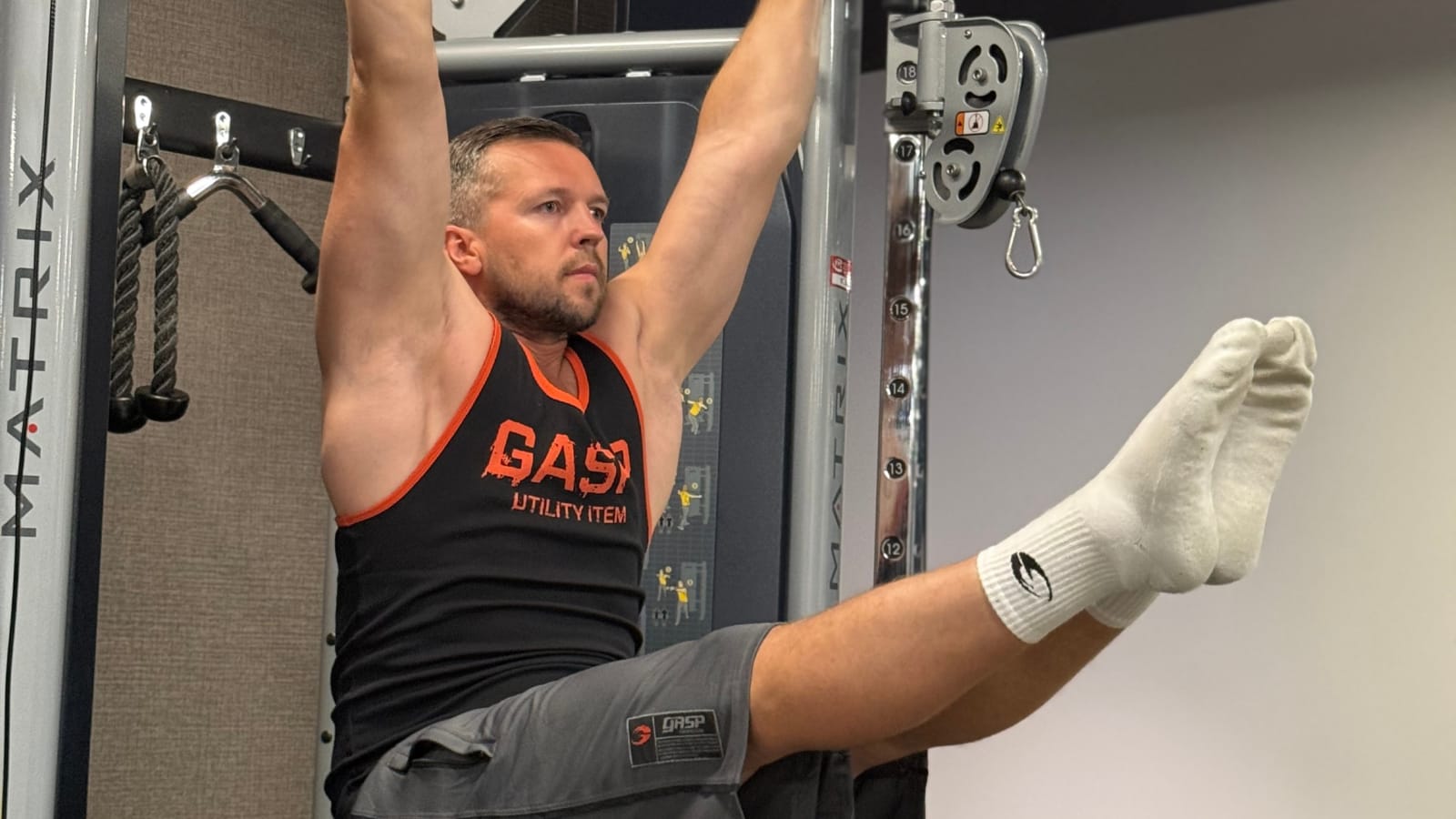
Most adults who can't do a pull-up train for it the same way. Grab the bar, pull as hard as you can, get nowhere, drop. Try again next week. A month later, the only thing that's improved is how good they are at failing.
If you want to know how to do your first pull-up, start by changing that. Practice it like a skill: fresh, often, and never to failure. The exercises are the same ones every guide lists. The rules around them are what get you over the bar.
Why adults get stuck at zero
When you can't do a pull-up, the usual plan works against you in two ways.
Every attempt is a test. Pulling until nothing moves feels like hard work. But the rep you fail on teaches you one thing: where you fail. Do that a few times a week and you end up sore, flat, and no closer.
Your elbows are on a slower schedule than your muscles. Muscle gets stronger fast. The tendons that attach it to bone take longer. In the studies that tracked both over three months of training, strength went up first, and the tendons took about another month to start changing. Those were small studies on the knee and ankle, not the elbow, and not every study agrees, so treat it as direction, not a timetable.
In 16 years of coaching, this is where I see adults stall most. The muscles are ready for more before the elbows are. People push harder because it's finally working, and the elbows start to ache.
If your shoulder or elbow hurts, stop and see a doctor or physical therapist. That's their call, not a trainer's.
Negatives make both problems worse when you overdo them. You're stronger lowering than lifting, so you can pile up a lot of negatives before they feel hard, and lowering is the part that leaves you sore for days. A set of negatives to failure is the fastest way I know to lose a week.
How to do your first pull-up: practice it, don't test it
A pull-up isn't only strength. Your back, arms and grip have to learn to work together under your whole bodyweight, and you learn that with clean reps, not failed ones.
A pull-up is a skill you practice, not a test you keep retaking.
Three rules:
- Fresh. Practice at the start of a session, or on its own. Not after a hard upper-body session, not at the end of a long day. If you slept badly, don't test anything. Modify the session instead: drop to an easier step, keep the same sets, stop while you're still fresh.
- Often. Three or four short sessions a week beat one long grind. If you already train three or four times a week, put it at the start of each one. Fifteen minutes is plenty.
- Never to failure. Stop every set with a rep or two left. If the last rep looks different from the first, you did one too many.
The third rule is the one people fight, because it feels too easy. But when researchers pooled the studies comparing sets taken to failure with sets stopped short, strength gains came out about the same. Going close to failure seems to matter more for muscle size, which is a different goal. Most of those studies used gym lifts, not people chasing their first pull-up, so treat it as direction. It matches what I see: stopping short is what lets you practice often, and practice is what gets you there.
A practice session looks like this:
- A short hang and a few scapular pulls to warm up.
- Your main step from the ladder below: several short sets, a couple of minutes apart, each one stopped while it still looks clean.
- Negative pull-ups, once you've reached them: two days a week, never back to back, a few slow ones. On the other days, top holds are your main step.
- Rows to finish.
The pull-up progression for beginners
This is the standard ladder, and it works. Your main step is the first one you can't do comfortably yet. Move up when it looks easy, not when the calendar says so.
- Hang. Hold the bar with straight arms and build up to about 30 seconds. It's shoulder mobility work too, for the same reason loaded range beats stretching: you're owning the position, not just visiting it.
- Scapular pulls. From the hang, pull your shoulders down away from your ears without bending your elbows. It's a small move, and it's the first inch of every pull-up.
- Rows. Hang under a bar at hip height, heels on the floor, and pull your chest to it. The closer your body gets to horizontal, the harder it gets.
- Top holds. Use a box or a step to get your chin over the bar, then hold it there. This builds the finish.
- Negative pull-ups. Start at the top and lower yourself slowly, three to five seconds all the way down. When you can't control the speed anymore, the set is over. A negative that turns into a drop teaches you nothing.
- Bands, if you use them. Pick the lightest band that still lets you finish clean. A band helps most at the bottom and least at the top, so keep the negatives and top holds in the mix.
A chin-up, with your palms facing you, is usually easier because your biceps help more. If one comes before your first pull-up, count it as progress. Search my exercise library for "pull-up" to see the full movement, step by step.
No bar at home?
Rows under a sturdy table and the towel pull work the same muscles. Both are in my guide to bodyweight strength training without a gym. They'll build the pulling strength, but sooner or later you need something to hang from. A doorway bar works, as long as your door frame is solid enough to hold it.
How long it actually takes
I started gymnastics at four, so I've never been an adult who couldn't do a pull-up. What I can give you is what I've watched adults go through.
If you're already fit and on the lighter side, the first rep can come within months. If you've never trained and you're on the heavier side, it can take years.
Three things decide where you land: how heavy you are compared to how strong you are, how often you practice, and whether you keep going to failure. The first is physics, not a judgment. The other two are up to you.
That's why I don't promise anyone a first pull-up in 30 days. Nobody honest can.
Stop retaking the test. Practice the rep.
This week: find the first step on the ladder you can't do comfortably yet. Practice it three times, fresh, and stop every set with reps to spare.
If you want someone watching your reps and deciding when you move up, send me a message and we'll start with a call. In Chicago, we work on it in person. Anywhere else, online coaching with video form reviews covers it.
Get new posts by email
Training, nutrition, and staying consistent — straight to your inbox. No spam, unsubscribe anytime.