How to Start Working Out Again After a Long Break
How to start working out again after a long break: what comes back fast, what doesn't, and a four-week ramp that won't sideline you by week two.
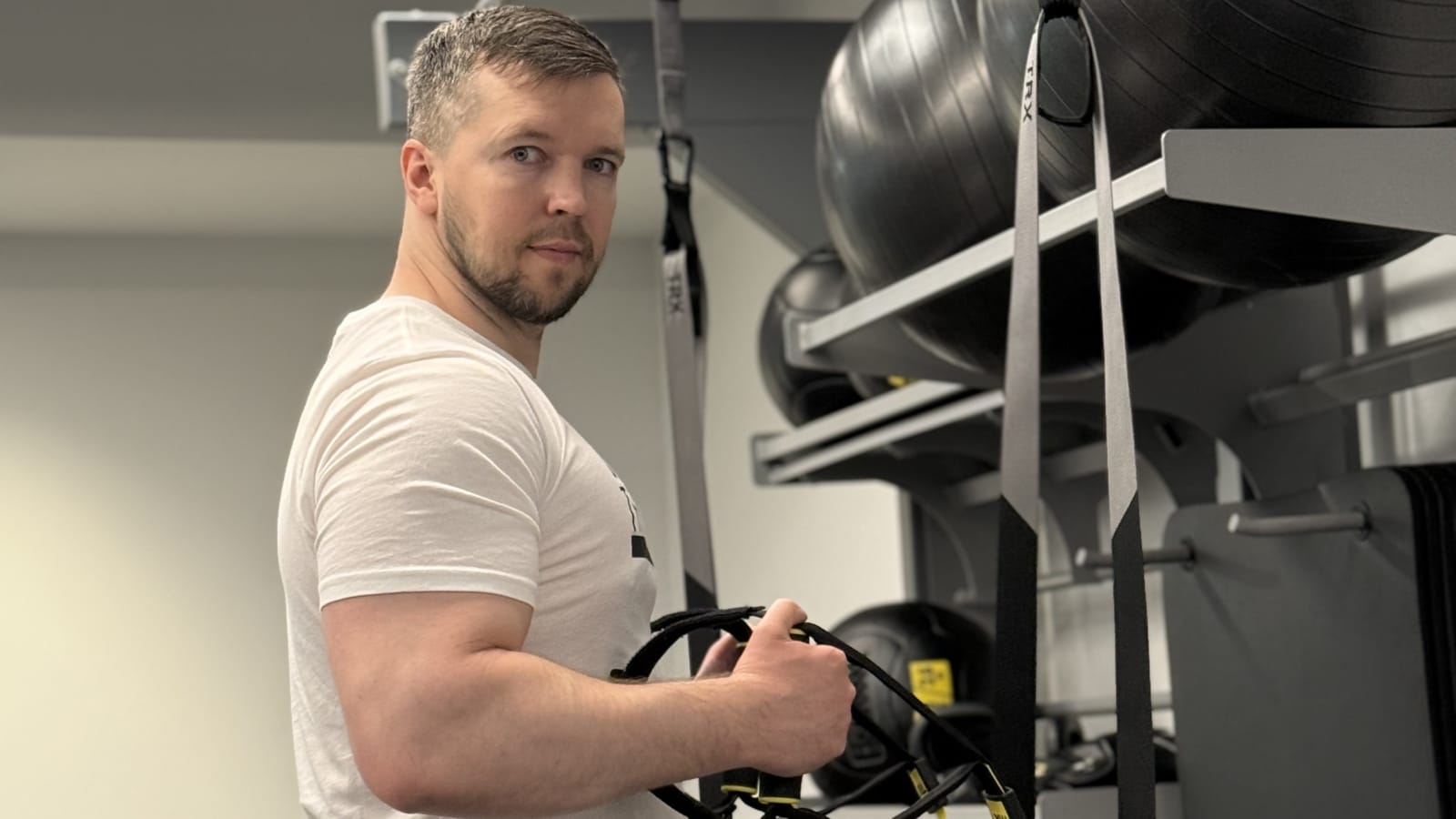
If you're figuring out how to start working out again after a long break, the problem usually isn't motivation. It's memory. You remember what you used to lift, how far you used to run, what a normal session felt like — and that memory is the fastest way to get hurt in week two.
In 16 years coaching, the people who fail a comeback almost never fail because they trained too little. They fail because they trained like they never stopped.
One thing before anything else: if your break was because of injury, illness, surgery, or pregnancy, get cleared by your doctor before you start. Everything below assumes you simply stopped.
What comes back fast, and what doesn't
Nothing detrains at the same rate, and nothing returns at the same rate either. That mismatch is the whole problem.
Coordination comes back quickly. Your nervous system remembers movement patterns. A squat that took months to learn the first time will feel familiar within a couple of sessions.
Strength comes back faster than it was built. If you had a real base, rebuilding it is quicker than building it was the first time. Not instant. Quicker.
Conditioning is honest. It goes first and it returns on its own schedule. Expect to be humbled by a flight of stairs.
Connective tissue is the slow one. Tendons and ligaments adapt more slowly than muscle, in both directions. That's the gap that hurts people: your muscles can move a load the structures around them aren't ready to handle yet.
The pattern I see most is a guy who benched a certain number five years ago, gets within range of it in week one because the muscle is still willing, and is out with elbow or shoulder pain by week three. Nothing tore. It just wasn't ready. If you're over 40, that gap is wider — I covered it in more detail in starting strength training after 40.
How to start working out again without wrecking week two
One rule covers most of it: for the first month, leave every session feeling like you could have done another set.
That isn't a motivational idea. It's structural. You're not trying to make progress in month one. You're building the tissue tolerance that lets you make progress in month three.
A few things follow from it:
- Two to three sessions a week, full body. Frequency before intensity. Showing up three times at 60% beats one heroic session and five days of recovery.
- Soreness is not a scorecard. Being wrecked for three days means you did too much, not that it worked.
- Start with bodyweight. For the first two or three weeks you don't need a loaded barbell. Push-ups, squats, lunges, rows and planks, done through full range with control, load the system honestly. This isn't a downgrade or a warm-up phase — bodyweight training builds real strength, and it's the cleanest on-ramp there is, because you can't add load faster than your joints can follow.
- Move slower than feels necessary. Controlled on the way down, full range at the bottom. If you're not sure what a movement should look like, the exercise library covers technique.
A four-week ramp back
Treat this as a template, not a prescription. Adjust it to your history and your schedule.
Week 1 — two sessions. Bodyweight only, full body. One push, one pull, one squat, one hinge, some core. Stop while it still feels easy.
Week 2 — two or three sessions. Same movements. Add a rep or two per set, or a slightly harder variation. Still no barbell.
Week 3 — three sessions. If your movement looks clean, add light load. Light means a weight you could handle for roughly double the reps you're doing.
Week 4 — three sessions. Now you start adding a little week to week, and now progressive overload actually means something. Three days a week is enough to keep building from here.
Add real weight when all four of these are true: you hit full range without compensating, your last rep looks like your first, no joint pain lingers into the next day, and you recover between sessions. The calendar doesn't decide it. Those four do.
Then be honest about the timeline. Getting back to where you were takes months, not weeks. That's not a failure of the program — it's what the process costs. The reward for respecting it is that you get to keep training, instead of restarting again in six weeks.
If you want a hand with the first month
The first month back is the part people get wrong, and it's the part that decides whether there's a second month. If you'd rather not guess at it, send me a message and we'll set up a free 30-minute call — your training history, what the break was, what you're actually after. No pitch. And if I don't think I'm the right fit for you, I'll tell you that too.
Get new posts by email
Training, nutrition, and staying consistent — straight to your inbox. No spam, unsubscribe anytime.